
INSTRUMENT RATING
Fly In The Clouds
An Instrument Rating lets you fly in clouds and low visibility using only your instruments. It makes you a sharper, safer pilot, and every flying career requires it.
What an instrument rating unlocks
Weather cancels a lot of VFR trips. With an instrument rating, a cloud layer doesn't have to.
FAA flight time requirements
The minimums for an Instrument Rating, airplane, under 14 CFR 61.65.
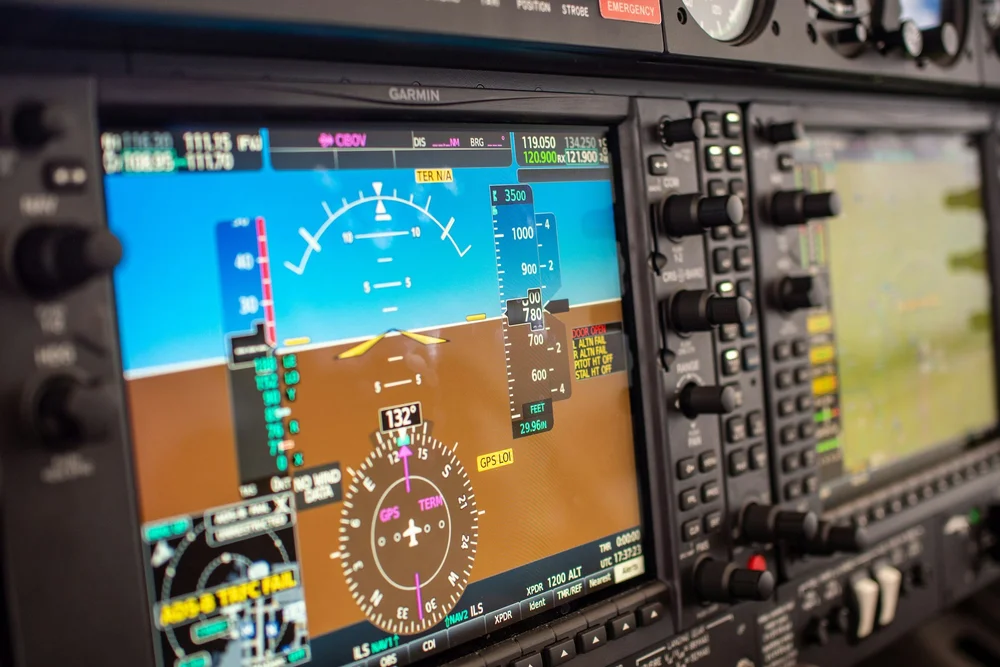
Down to minimums.
The ATIS is calling it ceiling 300 overcast, visibility one and a half in mist. You brief the ILS: localizer tuned and identified, inbound course set, decision altitude 200 feet above the runway, missed approach loaded. Before-landing check complete.
“Cessna 5 Papa Alpha, turn left heading 330, maintain 2,000 until established on the localizer, cleared ILS runway 36 approach.” You read it back. Localizer alive. The needle swings to center. Glideslope alive. One dot above, then centered. Power back, 90 knots, and the nose settles into a steady descent into solid gray.
No horizon now. Just your scan: attitude, localizer, glideslope, airspeed. Tower clears you to land. “One thousand to minimums.” Tiny corrections, a degree or two at a time. “One hundred above.” Still nothing but white.
“Minimums.” Then the approach lights punch through the mist, a rabbit of strobes pointing straight at the runway. “Runway in sight. Landing.” Mains on the centerline. You just flew through a cloud and found a runway you never saw until the last 200 feet. That's instrument flying, and we'll get you there.
Why train one-on-one?
Large academies are built for volume and speed. Many students do better with one instructor who knows exactly where they are.

READY WHEN YOU ARE
Take the controls.
Instrument training typically runs $15,000 to $19,000. Estimates are not quotes; your total depends mostly on how often you fly.